From Indian Fields to Your Kitchen · Made with Tradition
From Indian Fields to Your Kitchen · Made with Tradition
From Indian Fields to Your Kitchen · Made with Tradition

Chakki Milling Explained — From Whole Grain to Flour

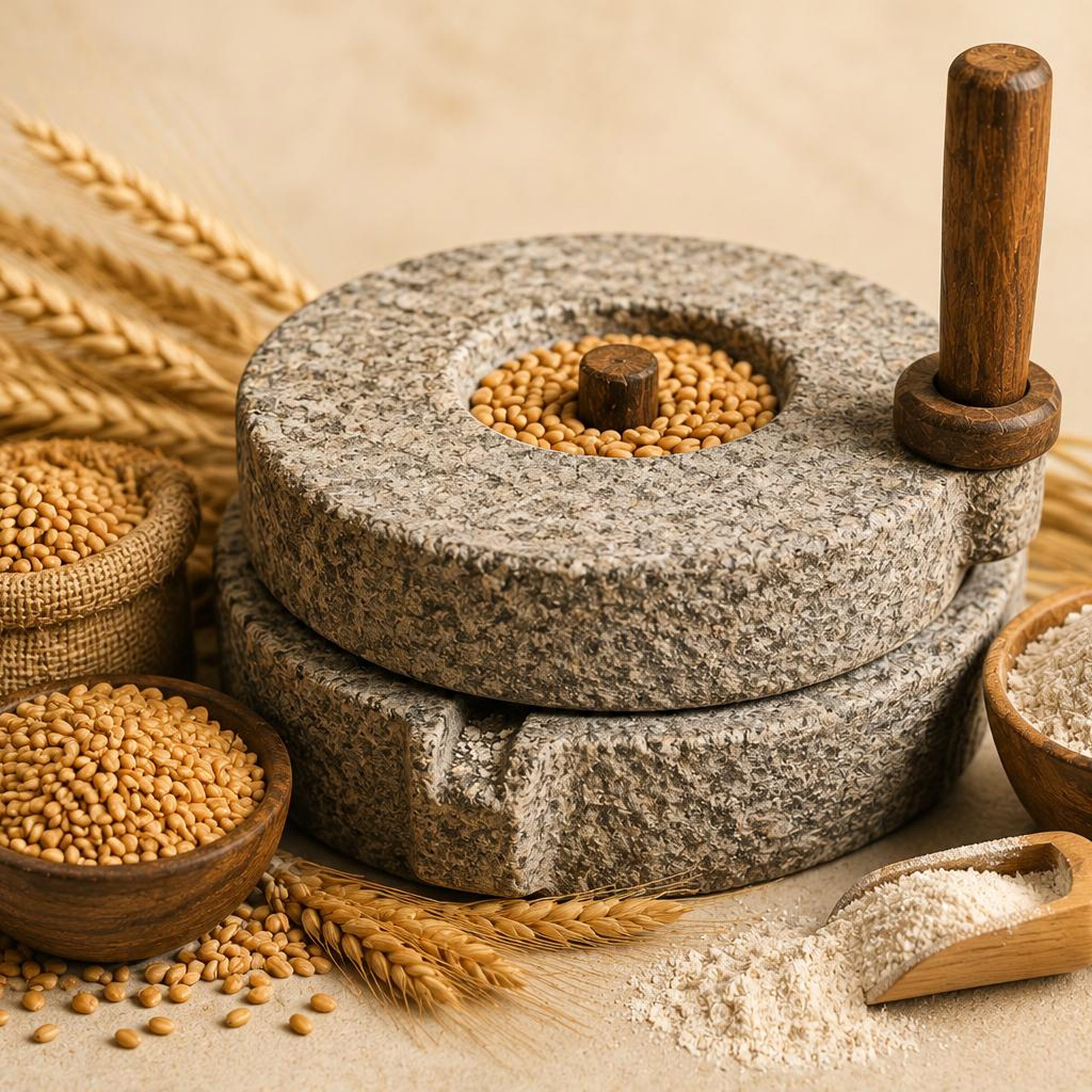
Understanding the Traditional Process Behind Your Atta
Before flour reaches our kitchens, it goes through a series of important steps. One of the most familiar methods in Indian households is chakki milling, a traditional approach to grinding grains that has been part of India’s food heritage for generations.
But what exactly is a chakki, and how does grain become the flour we use every day?
What Is Chakki Milling?
A chakki is a traditional grinding mill that uses two grinding surfaces to reduce grains into flour. In a traditional stone chakki, grain is placed between two stones, and the movement of the grinding surfaces gradually breaks it down.
The process connects everyday flour with a long history of grain preparation in Indian homes and villages.
Step 1: Grain Selection
The journey begins with selecting suitable grains. Factors such as grain variety, condition and cleanliness are important when preparing wheat for milling.
Step 2: Cleaning and Preparation
Before milling, grains are cleaned to remove unwanted materials such as dust, small stones and other impurities. Proper preparation helps protect the milling equipment and supports consistent processing.
Step 3: Grinding the Grain
The prepared grains are passed through the milling system, where they are ground into flour. Traditional stone milling uses grinding surfaces to break down the grain.
The final texture depends on factors such as the grain itself, the milling equipment and the settings used during processing.
Step 4: Checking and Packaging
After milling, flour is checked and prepared for packaging. Good handling, suitable storage and appropriate packaging help protect the product from moisture and contamination.
Traditional Chakki and Modern Milling
Traditional chakki milling and modern flour milling both aim to transform grains into flour, but their equipment and processing methods can differ.
Modern milling systems may use rollers, sifters and other specialised equipment to control particle size and separate different parts of the grain. Stone chakki systems use grinding surfaces to produce flour.
Neither the name of a milling method nor the equipment alone tells the whole story of a flour’s quality. Grain selection, processing conditions, hygiene and storage all matter.
Why the Milling Process Matters
Understanding how flour is produced helps us appreciate the work behind an everyday kitchen staple. It also reminds us that quality begins with the grain and continues through every stage of processing.
At Ashwyo Organics, traditional milling heritage inspires our approach, alongside attention to modern quality, hygiene and packaging practices.
From grain to flour, every step matters.